Content is one of many assets specific to any company. As you develop more and more content, you can reuse that content and use it consistently to build communication with your customers. In the same way, when you start expanding your business globally, you’ll want to use a translation memory (TM) to build a library of translated content. A TM is easy to build and ultimately has many benefits to any organization. Here, the translation and localization experts at SumaLatam describe what a translation memory is and how it can benefit you.
What’s a Translation Memory?
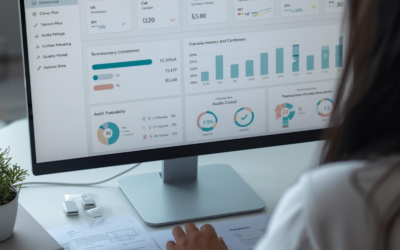
A translation memory is a database of all the source content and the associated translated content. It’s created by pairing the source word segments with the translated version of those segments.
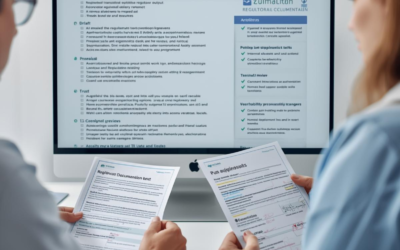
Here’s how it works. A TM is used concurrently with the translation tool that the translators use to translate the content. A translator sees the source content on one side and then translates that content on the other side. When a word segment comes up that has been translated before, the TM automatically pre-populates that translation. The translator sees that content and can then choose either to accept or modify the target segment. Using a TM makes the translation work faster.
How Is a Translation Memory Created?
A language services provider using software creates a translation memory. When you submit a translation project to a translation company, they’ll run it through the software before the translator begins the work.
Any type of content can go through a TM—software, website copy, a Word document, a spreadsheet, etc. In this way, you can quickly build a library of content that can be reused across each translation project.
How Do Translation Memory and Glossary Work Together?
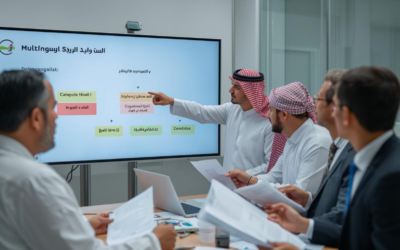
A glossary is another important tool in the translation process, and it works with the TM. A glossary is a database of terms that are frequently used throughout content. Terms can be anything, from product to industry to company terms. A glossary is usually created before a translation project begins. The terms are translated by the translation company and sent to in-country reviewers or the client for approval. Once the glossary is approved, it’s incorporated into the TM as a termbase for the translators to use during their translation work. Together, the glossary of terms and the TM build a library of approved content that can be reused.
The Benefits of a Translation Memory
A TM has several benefits including:
- Improved accuracy and consistency – The terms and target segments are stored in a database and can be reused across any translation project. Since some source words can be translated in different ways depending on the context and the translator, having a database of reusable content ensures that the right content will be used every time, resulting in more consistent translations.
- Faster time-to-market – Since a portion of the translations is recycled, a translator can focus on the new content. Overall, it takes less time than having to translate everything from scratch, so it enables a faster time-to-market.
- Reduced costs – As a TM builds and builds from each translation project, it “recognizes” more word segments. A word segment that hasn’t been translated before is called a “new” word, which is the most expensive kind of word. A word that matches another word 100% is called a “100% match”, and that’s the least expensive kind of word. So as the TM grows, the number of new words should decrease and the number of repetitions should increase, resulting in lower translation costs.
- Valuable business asset – Just as a business has a source content asset, a TM is also a business asset for translated content.
Conclusion and Next Steps
A translation memory is an effective and essential tool that helps the translation process by building a library of content that can be reused across every translation project. A TM improves content accuracy and consistency as well as time-to-market, and reduces translation costs.
SumaLatam is a professional translation services company that helps clients with a variety of translation tools. With 20 years of experience, we provide comprehensive language solutions, no matter how complex or simple your translation project may be. If you have any questions about a translation memory, glossary or the translation process, email us at contact@sumalatam.com or visit our website.