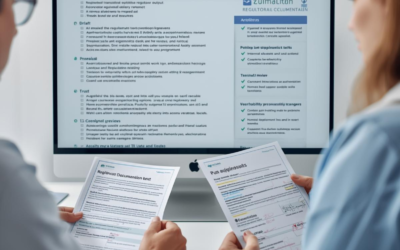
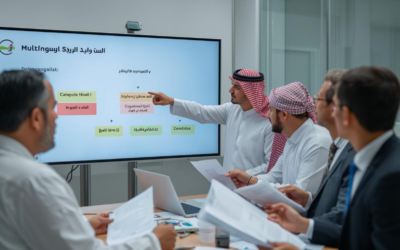
Clinical trials have crossed borders to become international projects involving participants, researchers, and regulators from multiple countries. This expansion requires essential documents for their execution—such as study protocols, informed consent forms, and regulatory reports—to be translated with precision and sensitivity. In this context, the localization of these materials is not just a technical challenge but an exercise in ethical and cultural responsibility that ensures understanding and compliance with regulations across diverse settings.
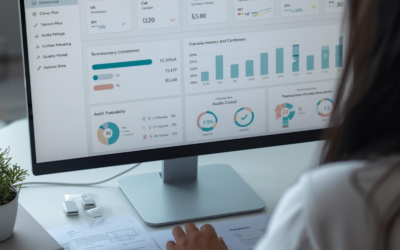
Artificial intelligence (AI) has emerged as a key tool to address the challenges of localizing clinical trials. Advanced models, such as neural machine translation (NMT), can process massive volumes of text in multiple languages with unprecedented speed and consistency. These tools enable translation teams to meet ever-growing demands while ensuring terminological coherence in highly specialized documents. AI is particularly useful in areas like the translation of study protocols, adverse event reports, and regulatory documents, where technical accuracy is paramount. Moreover, AI models can identify errors, inconsistencies, and linguistic patterns that streamline the work of human translators.
Another critical aspect of localization is compliance with international regulations. Every country has its own standards and rules governing clinical trials, adding a layer of complexity to the translation process. While AI can identify technical terms and provide a base for translation, human translators are responsible for ensuring that the documents strictly comply with these regulations, avoiding significant legal and ethical issues. Errors in translating a protocol or an adverse event report can have serious consequences, jeopardizing the trial’s integrity and participants’ safety. For this reason, human intervention is indispensable to ensure that the translated materials are not only accurate but also conform to local and international regulatory frameworks.
In addition to cultural sensitivity and regulatory compliance, human translators bring something AI cannot replicate: critical judgment. Clinical trials contain complex and often sensitive data that require in-depth analysis and contextual understanding. A human translator can identify inconsistencies in the original text, ambiguities, or scientific errors that a machine would simply overlook. This level of scrutiny is vital in a field where mistakes can have serious implications for patient safety and health outcomes. For example, an error in interpreting a clinical result or describing a procedure could lead to incorrect decisions, endangering participants’ lives and the study’s credibility.
In this landscape, the key to addressing the challenges of localizing clinical trials lies in efficient collaboration between AI and human translators. AI acts as a tool that enhances efficiency, accelerates delivery times, and ensures consistency in technical terms, while humans ensure the quality, sensitivity, and contextual accuracy of the translations. At SumaLatam, we understand this synergy and apply it to every project we undertake. Our approach combines the best of both worlds: we can use AI tools to generate pre-translations for technical content, but we always ensure that our specialized translators review and adapt the content to meet the highest quality standards.
Moreover, in our innovation lab, SUMALAB, we constantly explore new ways to integrate AI technology into localization processes, ensuring these tools are used ethically and effectively. SUMALAB not only implements cutting-edge technologies but also adapts them to the specific needs of the health and pharmaceutical industries, ensuring that projects are not only technically flawless but also culturally relevant.
As the medical and pharmaceutical industries continue to expand globally, the localization of clinical trials will become an even more complex challenge. Although AI will continue to play a crucial role, human intervention will be more valuable than ever, especially in a field where errors are not an option. At SumaLatam, we firmly believe that the combination of advanced technology and human expertise is the only way to guarantee results that save lives.When it comes to translating medical and pharmaceutical content, it’s not just about words—it’s about people. Every correctly translated document ensures the safety, well-being, and trust of patients worldwide. Because at the end of the day, medical localization is not just a technical challenge: it’s a commitment to humanity.