Introduction
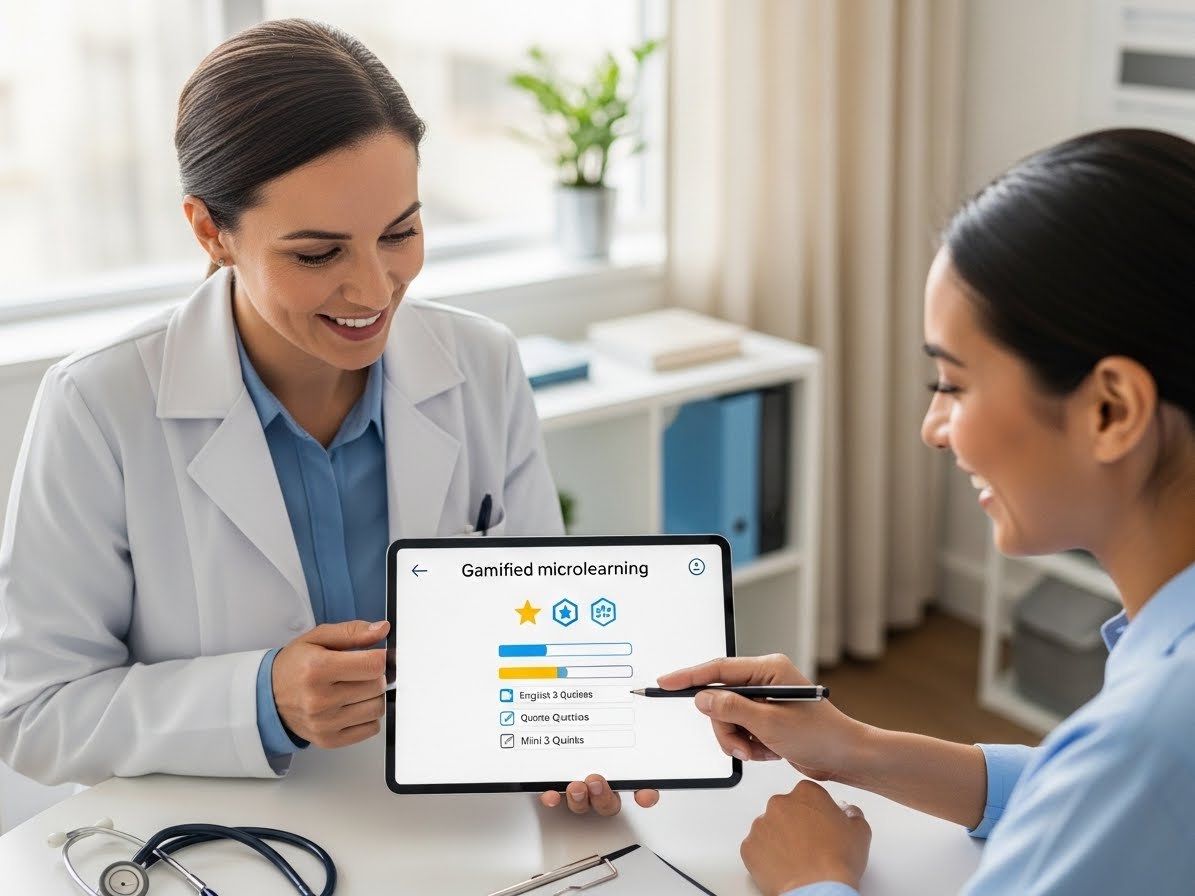
Gamification turns clinical content into short, motivating learning experiences. When combined with multilingual design, it reaches diverse communities with consistent impact. This article explains how to build gamified microlearning, provides practical examples, and lists the key metrics to measure retention and adherence.
Why gamification works in health education
- Boosts intrinsic motivation: instant feedback and rewards encourage repetition.
- Lowers cognitive load: short, focused units enhance comprehension.
- Improves adherence: gamified reminders and rewards support continued behavior.
Designing multilingual microlearning (practical steps)
- Define clear objectives: knowledge (e.g., inhaler technique) or behavior (e.g., adherence).
- Break content into micro-lessons: 30–90 seconds per unit, one core idea each.
- Pick simple mechanics: quick quizzes, daily challenges, stars, badges, and progress bars.
- Provide immediate feedback: brief explanations for right/wrong answers.
- Use spaced repetition: re-present critical concepts at increasing intervals to boost memory.
- Localize from the start: translate and adapt scenarios, names, units and cultural metaphors (not just words).
Practical examples
- 3-question side-effect quiz: feedback + badge on completion.
- “Log your dose” challenge with daily reminders: records adherence.
- Short decision-based simulator (video + choice): user chooses an action and sees consequences.
- Memory mini-game to recognize symptoms: supports early detection.
Effective localization (beyond translation)
- Use health-specialized translators and local clinical reviewers.
- Adapt images, examples and names to local cultures.
- Test with native users to validate tone and comprehension.
Metrics that matter
- Retention rate per module (%): measures sustained learning.
- Completion rate (%): percent of users finishing modules.
- Adherence rate (%): behavior change (e.g., medication uptake).
- Average time per module (s): suitability for microlearning.
- User satisfaction / NPS: perceived value.
- Reduction in repeat inquiries: impact on clinical workload.
Quick implementation checklist
- ✅ Learning objectives defined
- ✅ Plain-language script and localized versions
- ✅ Simple gamified mechanics and measurable events
- ✅ Clinical review and local user validation
- ✅ Metrics dashboard and monthly iteration
Conclusion
Multilingual gamified microlearning can significantly boost patient understanding and adherence. At SumaLatam we design micro-lessons, localize content and set up metrics to measure real impact. Contact us to run a pilot for your population.