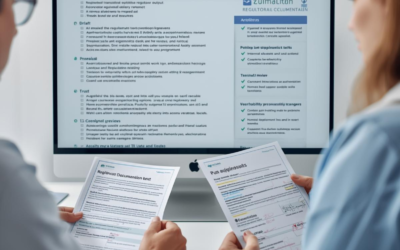
Combining artificial intelligence with human review can speed up regulatory translations while preserving quality if the workflow is properly designed. This guide explains when to use machine translation plus post-editing, the risks to avoid, and the traceability evidence required for compliance.
1. When to use machine translation + post-editing
Use this hybrid flow when you need speed and volume, while retaining technical control:
- Low-risk content: internal communications, reference documentation not used for clinical decisions.
- High-volume, repetitive assets: large manuals, FAQs and content with high terminological recurrence.
- Urgent deliveries: when turnaround is critical and immediate technical review is planned.
- Drafts or pretranslations: to accelerate the initial version before expert review.
Avoid MT+post-editing for documents where errors could endanger patients or cause regulatory noncompliance, such as informed consent forms, pharmaceutical labeling, critical instructions for use and mandatory regulatory notices.
2. Roles and responsibilities in the hybrid workflow
Clarify who does what:
- MT engine: produces the initial pretranslation.
- Human post-editor: corrects terminology, style, context and AI errors.
- Clinical/technical reviewer: validates medical, legal and regulatory accuracy.
- Project manager: controls versions, timelines and QA evidence.
Ensure competencies: post-editors should be trained in post-editing best practices; technical reviewers must be domain experts.
3. Recommended workflow (minimum steps)
- Preparation: clean and normalize translation memories and glossaries.
- Machine translation: generate pretranslation with engine settings and glossary enforcement.
- Human post-editing: linguistic and contextual corrections by trained post-editors.
- Technical review: domain expert validation.
- Final quality control: automated checks plus manual verification of numbers, units and codes.
- Approval and sign-off: technical reviewer signs off with date.
- Publication and archiving: final version with metadata stored in a secure repository.
4. How to document traceability (what to record)
To meet audits and compliance, record the following for every file:
- File metadata: source, language, version, authors, timestamps.
- MT process log: export of engine settings, model version, glossary applied.
- Post-edit log: who edited, main edits summary and time spent.
- Technical review record: reviewer name, credentials, comments and sign-off.
- QA report: automated check results and manual checklist.
- File checksum / timestamp: prove integrity at delivery time.
- Communication records: emails or ticket threads resolving terminology or regulatory queries.
- Glossary and TM versions: exact versions used, with dates.
Store all artifacts in a controlled repository with access logs and backups; produce an audit package when required.
5. Security and compliance best practices
- Use private environments or on-premise solutions for models when handling sensitive data.
- Require NDAs and data protection agreements for all vendors.
- Avoid uploading personally identifiable data to public AI services; apply anonymization.
- Define retention and secure deletion policies for generated content.
6. KPIs and metrics to monitor
- TM reuse rate post-editing (%).
- Average post-editing time per 1,000 words.
- Critical incident rate per 1,000 words.
- End-to-end cycle time from MT generation to technical approval.
- Segment rejection rate by technical review.
- Reviewer satisfaction scores.
Quick checklist (before rolling out a hybrid flow)
- ✅ Defined roles and competencies for post-editors and technical reviewers.
- ✅ Normalized glossaries and TMs.
- ✅ Documented MT configuration and policies.
- ✅ Templates for post-edit reports and QA checklists.
- ✅ Secure repository with version control and backups.
- ✅ NDAs and data handling rules.
Conclusion
AI gives speed; humans give assurance. With governed hybrid workflows and solid traceability, you can reap both benefits for regulatory content. At SumaLatam we design AI + human processes for regulatory documents and prepare audit-ready documentation. Contact us to tailor a hybrid workflow for your program.