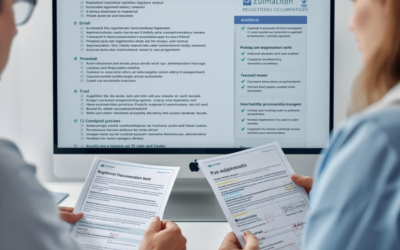
Terminology consistency in medical translation is essential. Discover how glossaries, TMs, and expert review make the difference.
In large-scale multilingual projects — particularly in the healthcare and pharmaceutical sectors — terminology consistency is a non-negotiable requirement. It’s not just about translating words; it’s about ensuring that technical and medical terms are used uniformly across documents, languages, and formats.
Why is terminology consistency so important?
In medical content, inconsistent terminology can lead to confusion, misinterpretation, or legal consequences. This is especially relevant for materials such as:
- Clinical trial protocols
- Medical device user instructions
- Drug labeling
- Informed consent forms
When multiple translators and reviewers are involved, maintaining consistency becomes a challenge — but it’s one that can be solved.
Best practices to ensure terminology consistency
- Specialized glossaries
Creating a glossary of key terms with approved equivalents and usage notes helps guide the entire translation team from the start. - Translation memories (TMs)
CAT tools allow translators to store and reuse previous translations. This not only speeds up workflows but ensures consistent terminology across large volumes. - Specialized medical review
An expert reviewer in the medical field is key to ensuring terms are accurate from clinical, regulatory, and cultural perspectives. - Centralized project management
A language project manager can ensure the correct use of glossaries and TMs, provide guidance, and oversee quality throughout the process.
Conclusion
In medical translation, terminology consistency is critical for quality, safety, and trust. Glossaries, TMs, and expert review help reduce risks and maintain precision at every step.At SumaLatam, our interdisciplinary teams ensure that every term is accurate, every time, in every language. Because in healthcare, every word matters.